

Ultimate Guide to Implementing a Wellness Management System in 2026
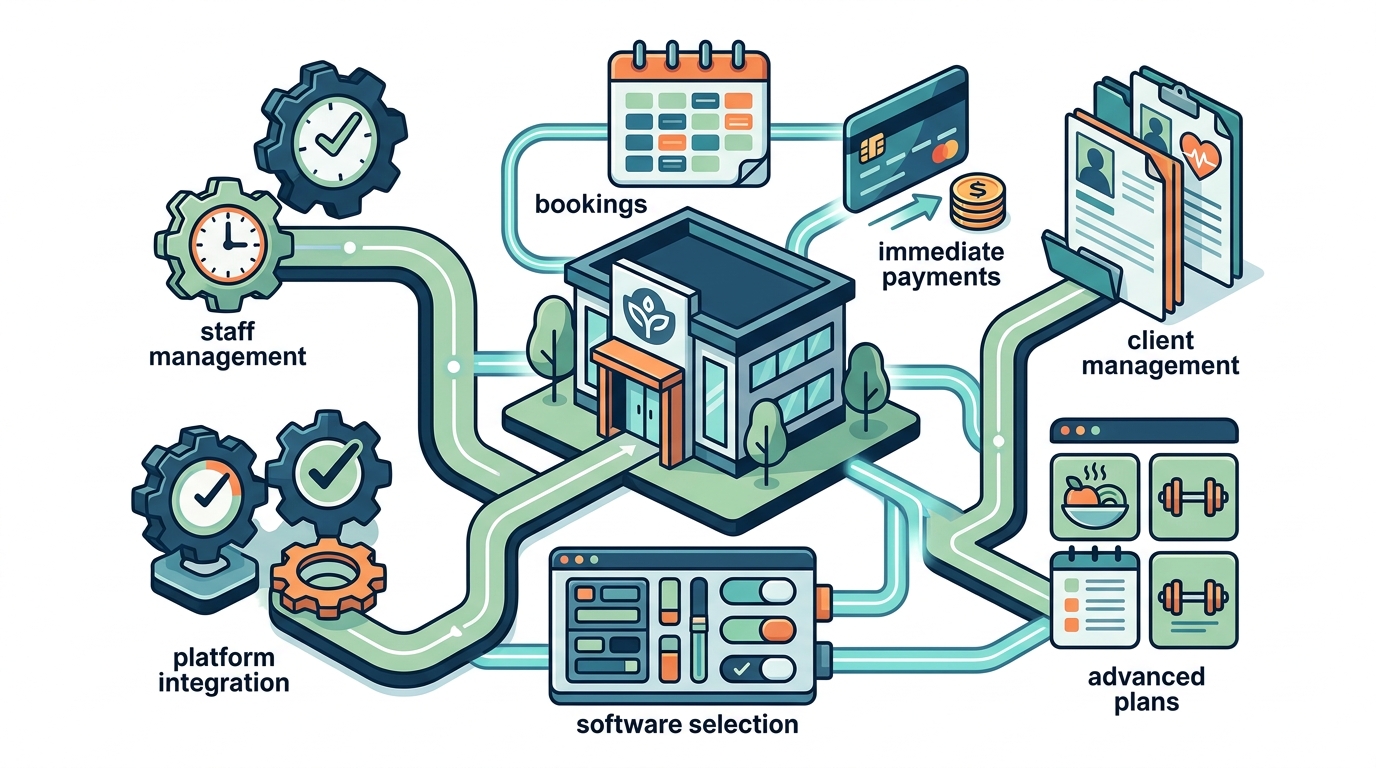
Implementing an effective management system for a wellness center requires selecting an all-in-one platform that automates bookings, processes immediate payments, and manages client data without taking a commission. This guide covers the essential steps for staff management, platform integration, and software selection. It provides a structured roadmap for wellness professionals to reduce administrative stress and increase operational efficiency using modern digital tools.
Staff Management and Scheduling
Staff management is the coordination of employee schedules, availability, and workload distribution within a wellness facility. For professionals offering services like yoga, pilates, or personal training, manual scheduling often leads to double-booking errors and inefficient use of studio space. A robust system must allow administrators to define specific working hours for each collaborator while automatically syncing their availability with the public booking calendar. For additional details, review the GurYou.
Automated Availability Syncing
Modern management tools eliminate the need for manual calendar updates. When a trainer marks a time slot as available, the system instantly reflects this in the client-facing interface. This synchronization ensures that clients only see open slots, reducing the friction of booking and minimizing the administrative time spent resolving scheduling conflicts. For additional details, review the GurYou.
Workload Balancing
Effective staff management involves monitoring the distribution of classes and one-on-one sessions. By visualizing the workload across the team, managers can ensure that no single professional is overbooked while others remain underutilized. This balance is critical for maintaining high-quality service delivery and preventing staff burnout in high-volume wellness centers.
The Role of an Integrated Management Platform
An integrated management platform is a unified software solution that combines bookings, payments, client records, and marketing tools into a single interface. Fragmented systems, where a studio uses one app for scheduling and another for invoicing, create data silos that hinder business growth. An all-in-one approach ensures that every interaction, from a class booking to a subscription renewal, is recorded in a central database.
Unified Client Profiles
Seamless Payment Processing
Integration is most critical in the payment flow. A cohesive platform processes transactions directly within the booking environment. This reduces the drop-off rate that occurs when clients are redirected to external payment gateways. Immediate payment processing ensures that revenue is recognized in real-time, providing accurate financial visibility for the business owner.
Step-by-Step Implementation Process
Management system implementation is the structured process of migrating existing operations to a new digital platform. A phased approach minimizes disruption to daily operations and ensures that all staff members are comfortable with the new tools. The process typically involves data migration, configuration, and a period of parallel operation before fully retiring legacy systems.
Phase 1: Data Migration and Configuration
The first step involves importing existing client lists, service catalogs, and staff schedules. Accurate data migration is vital to maintain continuity of service. During this phase, administrators must configure business rules, such as cancellation policies and payment methods, to align with the center's operational standards.
Phase 2: Staff Training and Onboarding
Technology adoption depends on user proficiency. Conducting hands-on training sessions ensures that front-desk staff and trainers understand how to manage bookings and handle client inquiries. Providing clear documentation and access to continuous support resources accelerates the learning curve and reduces resistance to change.
Phase 3: Launch and Optimization
After a soft launch, the business should monitor key performance indicators such as booking conversion rates and payment success rates. This period allows for the fine-tuning of notification settings and interface layouts based on actual user behavior and feedback.
Criteria for Software Platform Selection
Software platform selection is the evaluation of available management tools against specific business requirements and long-term growth goals. The right choice depends on the scale of the operation, the complexity of the service offerings, and the financial model of the business. Evaluating platforms based on transparency and flexibility is essential for long-term sustainability.
Financial Transparency and Commissions
One of the most significant factors in selection is the fee structure. Many traditional platforms take a percentage of every transaction, which erodes profit margins as the business scales. Platforms that offer zero commissions allow wellness professionals to retain all earnings from their bookings. This financial model is particularly advantageous for high-volume centers where transaction volume is substantial.
Feature Flexibility and Customization
Wellness businesses vary widely, from single-trainer studios to multi-location fitness franchises. The selected software must support diverse service types, including video classes, subscriptions, and custom workout plans. Flexibility in branding, such as the ability to create a personalized app with custom colors and styles, enhances the client experience and reinforces brand identity.
Comparison of Management Approaches
| Feature | Fragmented Tools | Integrated Platform (e.g., GurYou) |
|---|---|---|
| Payment Processing | External gateways, potential delays | Direct, immediate payments, zero commissions |
| Data Management | Multiple logins, data silos | Single dashboard, unified client profiles |
| Customization | Limited to individual tool capabilities | Personalized apps, custom branding |
| Support | Varies by vendor | Tailored, continuous support |
Key Takeaways
- Staff management automation reduces scheduling errors and optimizes resource utilization.
- An integrated platform eliminates data silos by unifying bookings, payments, and client records.
- Implementation should follow a phased approach: data migration, training, and optimization.
- Zero-commission payment models significantly improve profit margins for growing wellness businesses.
- Customizable branding options, such as personalized apps, enhance client retention and brand loyalty.
- Continuous support is critical for resolving technical issues and optimizing business workflows.
- Transparency in pricing and features is a key differentiator when selecting a management system.
Frequently Asked Questions
What is the most important feature in a wellness management system?
The most critical feature is the integration of bookings and payments. This ensures that revenue is captured immediately and that client data is centralized, reducing administrative overhead and improving cash flow visibility.
How long does it take to implement a new management system?
Implementation typically takes between two to four weeks, depending on the volume of data to migrate and the complexity of the service catalog. A phased rollout helps minimize disruption to daily operations.
Can a management system handle both group classes and one-on-one sessions?
Yes, modern platforms are designed to manage diverse service types. They allow for the configuration of different booking rules, pricing structures, and capacity limits for both group classes and individual appointments.
What are the benefits of zero-commission payment processing?
Zero-commission processing allows the business to retain 100% of the revenue from each booking. This is particularly beneficial for high-volume centers, as it directly improves net profit margins without increasing the price of services.
How can a personalized app improve client retention?
A personalized app provides a seamless, branded experience for clients. It allows them to book classes, access video content, and manage their subscriptions within a single interface, increasing engagement and loyalty.
Is it necessary to migrate all historical data to a new system?
While migrating recent data is essential for continuity, it is often not necessary to import years of historical records. Focus should be placed on active clients and current service configurations to ensure a smooth transition.
How does a management system support marketing efforts?
By centralizing client data, the system enables targeted marketing campaigns. Professionals can segment clients based on attendance patterns and send personalized notifications for new classes or promotions, driving re-engagement.
Conclusion
Implementing an effective management system is a strategic investment that transforms the operational efficiency of a wellness business. By prioritizing integrated platforms that offer immediate payments and zero commissions, professionals can focus on delivering high-quality services rather than managing administrative tasks. GurYou provides the comprehensive tools necessary to grow your business without stress, ensuring that every aspect of your operation, from staff scheduling to client retention, is optimized for success. To begin your transition to a streamlined management system, create a free account and explore the full suite of features designed for wellness professionals.